Tradition Woven into Every Build
Explore each symbol to understand its meaning and tradition.
The Smoke Hole - A Link Between Realms
The Smoke Hole
A Link Between Realms
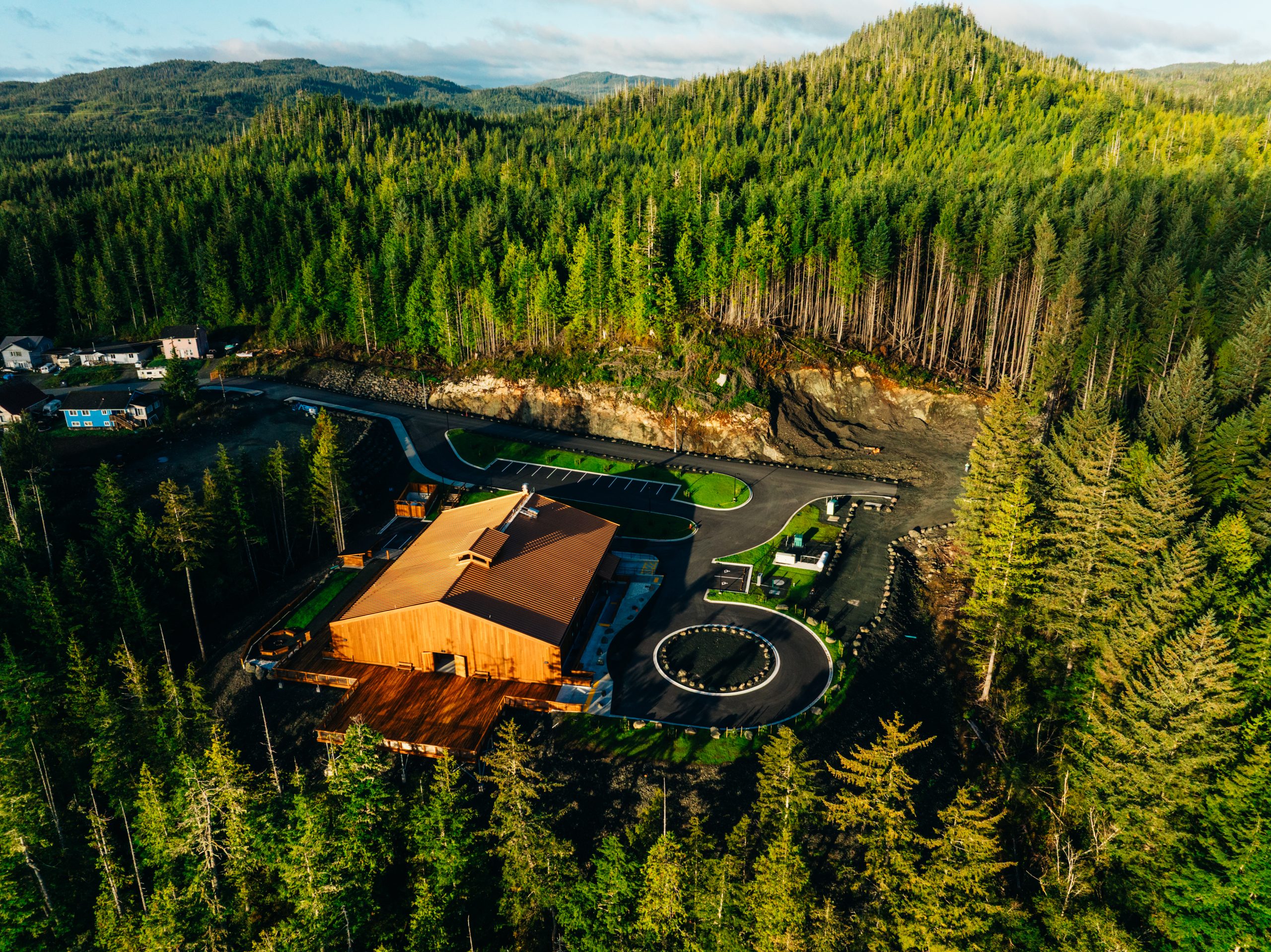
At the heart of the Big House lies the smoke hole, a significant architectural and spiritual element in Kwakwaka’wakw culture. Beyond merely providing ventilation for the central fire, it symbolizes a bridge between the human realm and the sky realm, serving as a conduit for prayers, songs, and ceremonial smoke to ascend.
During ceremonies, the fire acts as the soul of the house, with the smoke transporting teachings, intentions, and spiritual energy into the sky. The smoke hole facilitates the release of this energy from the house, preventing it from being confined within, and ensuring that what is expressed during ceremonies, whether for uplifting, healing, or transformation, continues its journey beyond the individuals present. The Big House is often perceived as a living entity, and the smoke hole can be likened to its breath, fostering harmony between those inside and the spiritual realm above.
Traditionally, Big Houses were oriented towards the water. Although the structures were not always ornate, the main entrance consistently faced the ocean, recognizing the water’s vital role as a source of life, travel, and connection for the community. In this manner, the house remains anchored to the land while always directed towards the waters that nourished the people.
House Posts and Sisiutl Beam
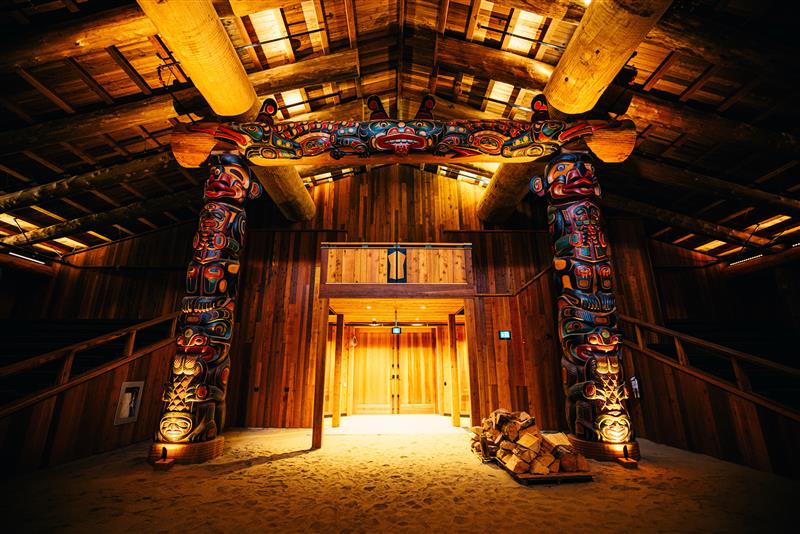
These carved house posts carry family crests that represent lineage, identity, and responsibility within the Big House. Connecting them at the center is a beam carved with the Sisiutl, a powerful supernatural being within Kwakwaka’wakw tradition, often understood as a protector and a bridge between the natural and spiritual worlds. The Sisiutl is widely recognized across many Big Houses and is associated with strength, guardianship, and spiritual power.
The space beneath this beam holds important ceremonial meaning, where dancers stand and prepare during specific ceremonies. In some traditions, dancers such as the Hamatsa, Goat Hunter, and Madam dancers would enter from above, descending to the dance floor and bringing teachings, movement, and ancestral presence to life within the house.
House Posts and Sisiutl Beam
Big House Post - Thunderbird and Dzunakwa
Big House Post
Thunderbird and Dzunakwa
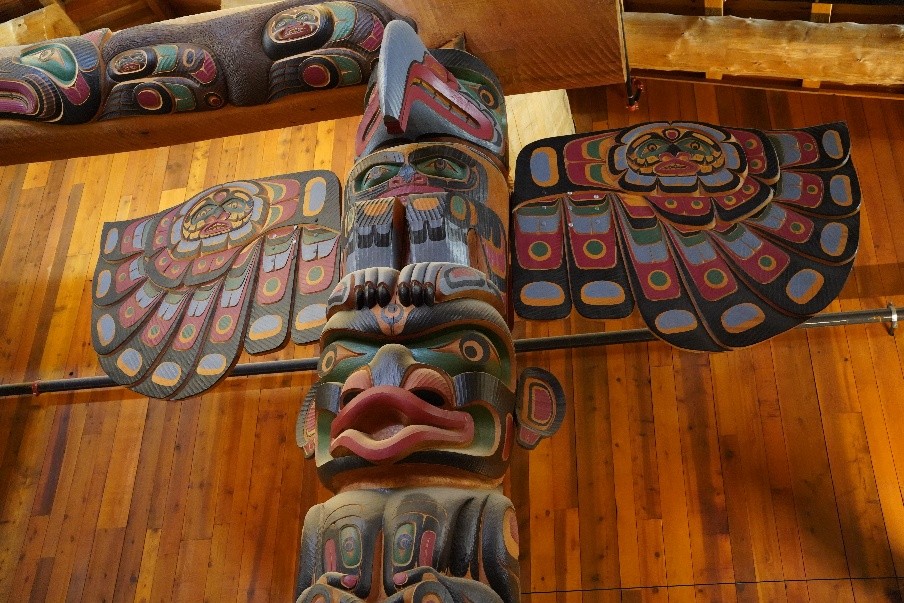
In a traditional Big House, posts represent the families connected to the house and carry important ancestral crests and in each house, there is 4 totem poles. This pole features the Thunderbird, a powerful protector known to watch over the community, and Dzunakwa, the Wild Woman of the Woods, whose stories teach children about safety, respect, and listening to guidance. Together, they reflect protection, responsibility, and the sharing of cultural teachings through crest art.
Kelp Head Rafters
Ancestral Presence
These six kelp head rafters represent ancestral spirit faces looking down toward the dance floor, symbolizing ancestors watching over ceremonies and gatherings. Connected to flood story teachings from Ba’as in the George family house, this history was carried forward to Yalis when the Big House was built. The rafters remind us that the Big House holds both living community and ancestral presence.
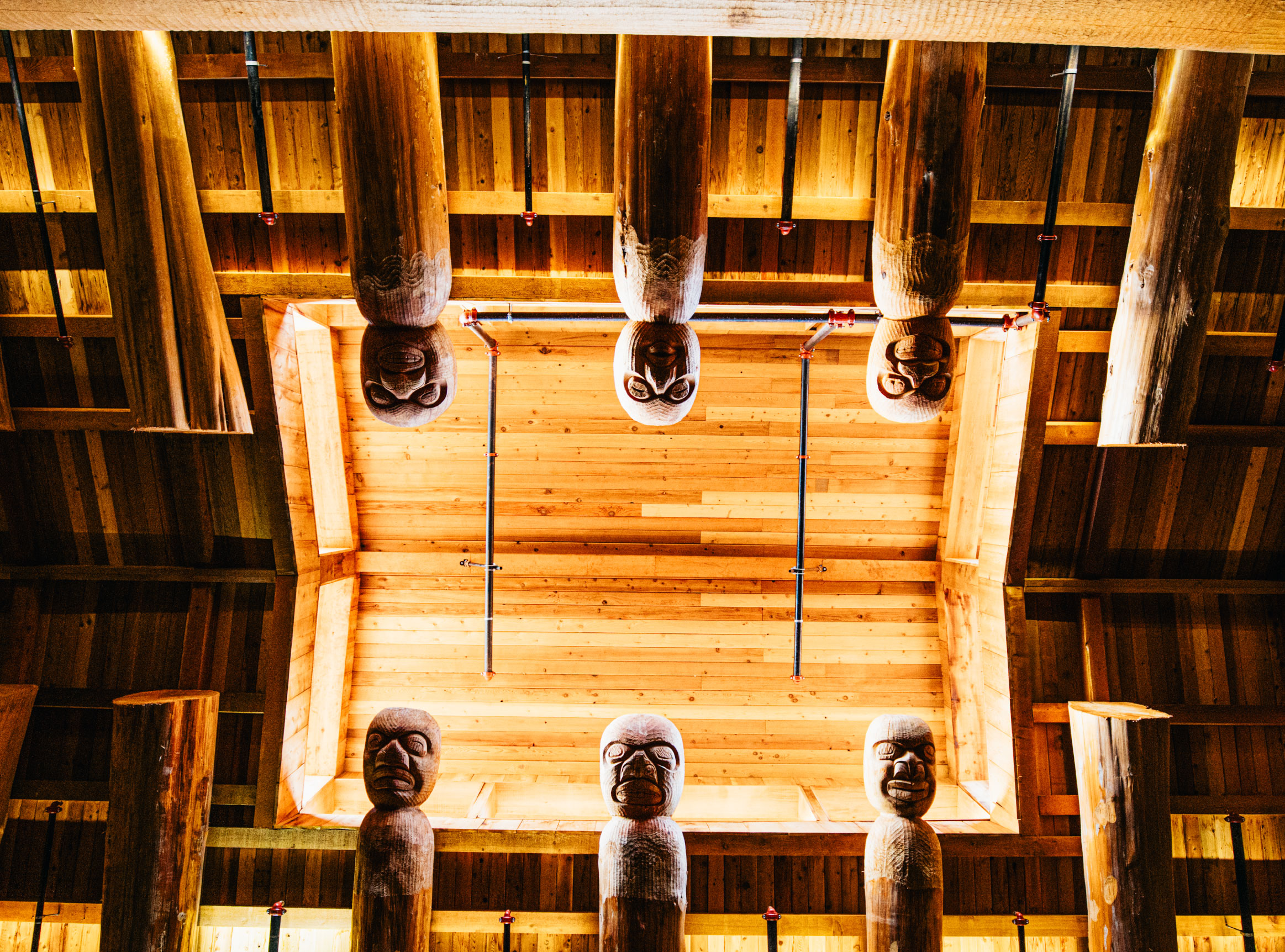
Kelp Head Rafters - Ancestral Presence
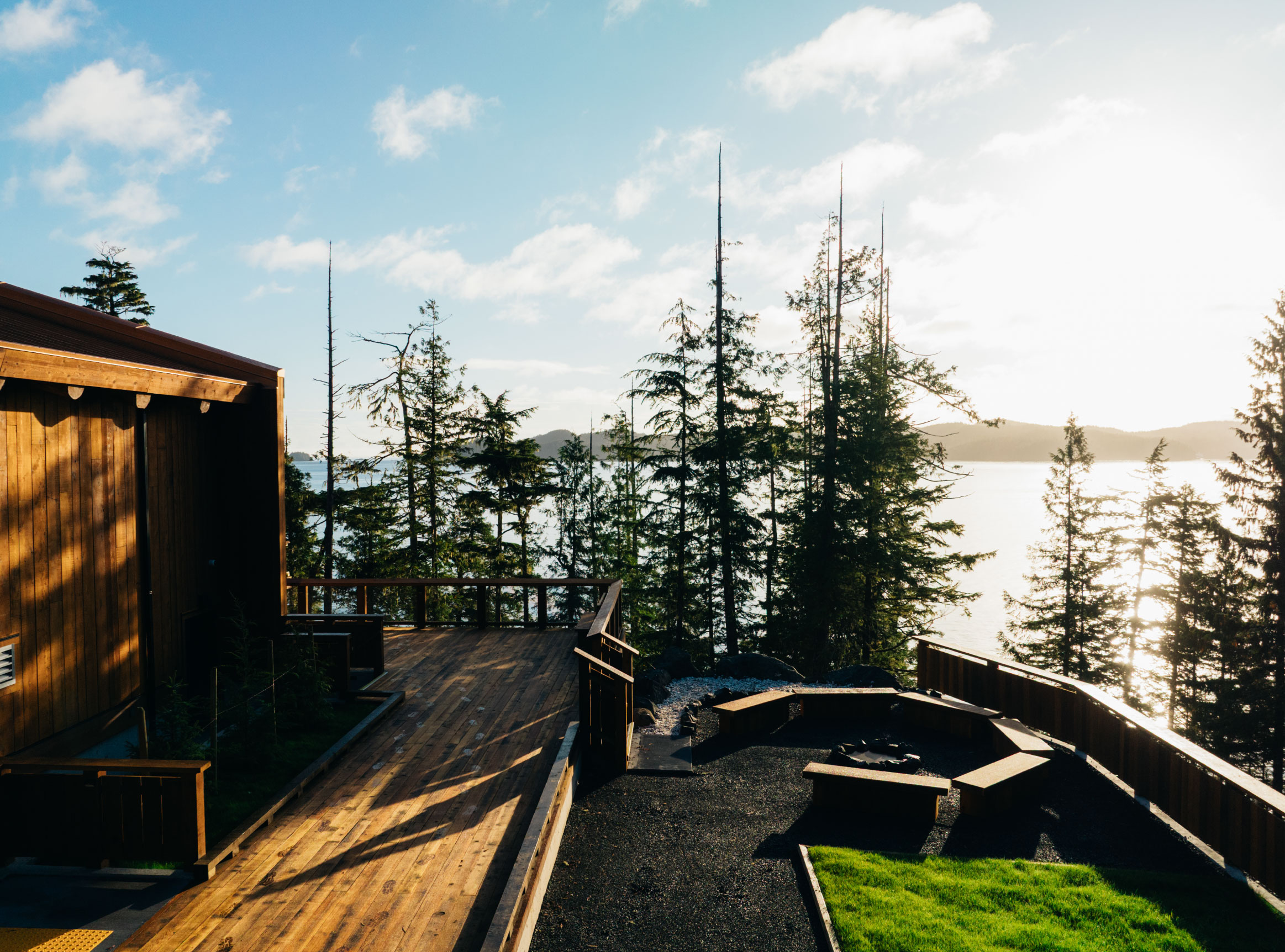
Outdoor Fire Pit - Gathering and Reflection Space
Outdoor Fire Pit
Gathering and Reflection Space
Located beside the Big House, this outdoor fire pit serves as a place for gathering, reflection, and cultural practice. In some traditions, fires may be used during memorial or burning ceremonies, where items belonging to a loved one are offered to the fire as a way of sending them onward to the spirit world. While beliefs and practices vary among families, this remains a meaningful and widely respected tradition.
The space also serves as a place for learning and connection. Elders may gather here to share stories and teachings, and it provides a quiet setting for conversation, reflection, and community debrief after ceremonies and events. Surrounded by the land and overlooking the water, it continues the role of fire as a place of warmth, remembrance, and shared understanding.